The government of Bangladesh has officially launched a nationwide agricultural census to gather updated data on the country’s agriculture sector. This large-scale census aims to collect comprehensive information about land use, crop production, livestock, fisheries, agricultural labor, and the socio-economic conditions of rural households. The initiative marks a crucial step toward understanding the changing dynamics of Bangladesh’s agriculture and ensuring data-driven policymaking for future development.
Objective of the Agricultural Census
The main objective of the agricultural census is to obtain accurate and up-to-date information on agricultural activities across the country. The data will help identify the number of farming households, their land holdings, types of crops grown, use of agricultural machinery, irrigation facilities, and the role of women in farming.
Accurate agricultural data is essential for national planning, formulating agricultural policies, and designing development programs that benefit farmers and the rural economy. The census also aligns with the Sustainable Development Goals (SDGs), particularly those related to zero hunger, poverty reduction, and sustainable agriculture.
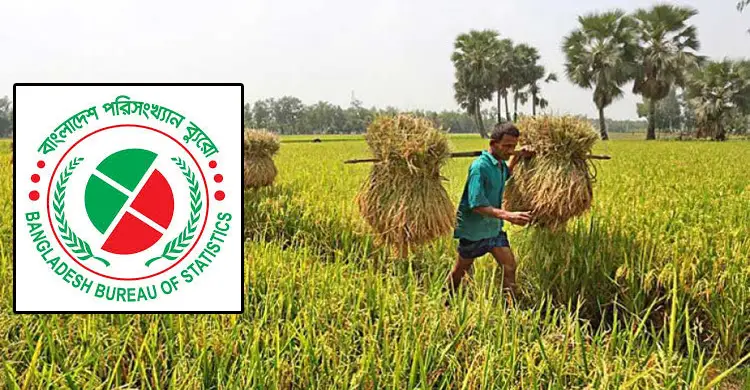
Conducted by the Bangladesh Bureau of Statistics (BBS)
The Bangladesh Bureau of Statistics (BBS) is conducting the agricultural census under the supervision of the Ministry of Planning. This census is a part of the regular data collection program that the BBS undertakes every ten years to monitor agricultural trends and evaluate progress.
Enumerators have been deployed across all districts, upazilas, and unions to collect detailed data from farming households. They will record information on farm size, ownership patterns, crop types, fertilizer usage, irrigation sources, and access to agricultural credit and technology. The entire process will be carried out using modern digital tools to ensure accuracy and efficiency.
Use of Digital Technology in Data Collection
Unlike previous censuses, the current agricultural census uses digital tablets and mobile-based applications for real-time data entry. This innovation helps reduce human errors, saves time, and enhances the accuracy of data collection. Digital data entry also allows the central monitoring system to track progress and verify information instantly.
Enumerators have been trained to use these digital tools effectively. The BBS has also developed an integrated data processing system to compile, analyze, and publish the census findings faster than before. Once completed, the census report will provide valuable insights into how Bangladesh’s agriculture sector is evolving in the face of modernization and climate change.
Importance for Policy and Planning
The agricultural census plays a vital role in shaping national agricultural policy. Reliable and detailed data helps policymakers design better support programs for farmers, allocate subsidies efficiently, and ensure food security. For instance, information on smallholder farmers and their productivity can guide decisions on fertilizer distribution, irrigation development, and access to credit.
Moreover, the census findings help identify regional disparities in agricultural resources and productivity. This allows the government to implement targeted programs in less developed regions, promoting balanced growth across the country.
Focus on Rural Development and Farmers’ Welfare
Agriculture remains the backbone of Bangladesh’s rural economy, employing a large portion of the population. The agricultural census will highlight the socio-economic status of rural households, their access to land, and their dependence on farming activities. It will also shed light on the challenges faced by small and marginal farmers, including land fragmentation, declining soil fertility, and limited access to modern farming technologies.
The government aims to use the findings to strengthen rural development programs, promote agricultural mechanization, and improve the livelihoods of farmers. Through better policy design, authorities hope to reduce poverty and increase food production sustainably.
Special Emphasis on Women in Agriculture
One of the significant aspects of this year’s agricultural census is the recognition of women’s contributions to agriculture. Women play a vital role in crop cultivation, livestock rearing, and post-harvest activities. The census will record gender-disaggregated data to measure women’s participation in agricultural labor and their access to land, credit, and technology.
This information will be crucial for designing gender-inclusive policies that empower women farmers and ensure equal opportunities in the agricultural sector.
Coverage and Methodology
The agricultural census covers all administrative areas of Bangladesh, including rural villages, urban peripheries, and char (riverine) regions. Data collection is being carried out using a sample-based method to ensure representation of all types of agricultural holdings, from small subsistence farms to large commercial enterprises.
Enumerators will visit each household to collect information through structured questionnaires. The collected data will then be verified and cross-checked at multiple stages before final publication. The entire census operation is expected to take several months, after which preliminary results will be released, followed by a detailed analytical report.
Role in Monitoring Agricultural Transformation
Bangladesh’s agriculture has undergone significant changes in recent years due to technological advancements, climate adaptation, and market diversification. The agricultural census will help assess the impact of these transformations on productivity, employment, and rural income.
By comparing data from the current census with previous ones, policymakers and researchers can identify long-term trends such as the shift from traditional to mechanized farming, changing crop patterns, and increased use of fertilizers and irrigation. These insights are essential for ensuring that Bangladesh’s agriculture remains sustainable and resilient in the face of climate challenges.
Collaboration with Development Partners
The agricultural census also involves cooperation with international development organizations, including the Food and Agriculture Organization (FAO) and other UN agencies. These partners provide technical assistance, training, and funding support to ensure that the census meets global standards. Such collaboration enhances the reliability of Bangladesh’s agricultural data and aligns it with international reporting requirements.
Expected Outcomes
Once completed, the census will provide a comprehensive picture of Bangladesh’s agricultural landscape. It will identify emerging challenges such as declining arable land, changing climate conditions, and the need for improved water management. The findings will also guide future investments in agriculture, particularly in mechanization, research, and innovation.
Furthermore, the data will support the preparation of national and regional development plans, contributing to the country’s long-term vision for food security and economic growth.
Conclusion
The beginning of the agricultural census across the country marks a significant milestone for Bangladesh’s data-driven agricultural development. By collecting accurate, detailed, and up-to-date information on the state of agriculture, the government aims to design smarter policies, support farmers more effectively, and ensure sustainable food production for the future.
As the census progresses, it is expected to provide a clearer picture of how agriculture is evolving and what strategies are needed to make the sector more productive, equitable, and resilient. Ultimately, this initiative will strengthen the foundation of Bangladesh’s rural economy and help build a more prosperous and food-secure nation.

CLICK HERE for Railway Job Circular Link